Loneliness, Well-Being, and the Be Present Empowerment Model
By Victoria Clevenger
I love Be Present’s amazing vision of building personal and community well-being on the strength of self-knowledge. I also deeply appreciate the practical wisdom and opportunity for practice that the Be Present culture and model offer.
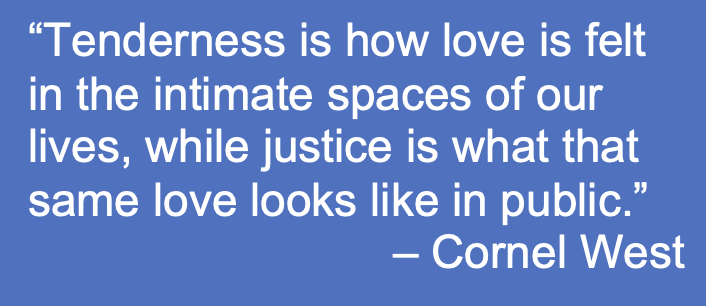 Dr. Vivek Murthy, US Surgeon General in 2014, embarked on a listening tour to hear directly what health concerns mattered most to people. To his surprise, emotional well-being, and especially loneliness, elicited the most interest from a wide variety of people. In his book, Together, Dr. Murthy discusses his belief that it’s because loneliness is “a universal condition” and that we are “hardwired for connection.” Dr. Jeremy Nobel, in his book Project Unlonely, describes loneliness as a natural biological signal, like hunger or thirst, alerting us to the lack of the connections we need and want for our own well-being. Both doctors suggest that lack of connection can arise in three ways: 1) from unmet needs for caring relationships (psychological), 2) unmet needs to feel one belongs or “fits-in” (sociological), or 3) unmet longings for a sense of “who I am” or “why I am here” (spiritual). Loneliness and disconnection from others or ourselves are not small matters. They adversely impact the body, heart, and mind, as well as the wellbeing of our global family and planet Earth.
We come into the world with needs for nourishment, safety, and connection for our well-being, and we experience discomfort when they are not met. Unmet needs represent a threat to well-being - and thus trigger the body to release biochemicals and other responses to deal with the threat. When these needs are chronically unmet, i.e., if the individual often feels anxious and unsafe, the overexposure to these biochemicals can result in physical, mental, and emotional problems, social isolation, and depression. People may learn to put up guards to protect themselves.
For me, the Be Present culture and Be Present Empowerment Model® (BPEM) create an environment that encourages my letting down my guards and being more open and honest in ways that foster healthy connection. Following are three ways I feel my well-being is supported:
1) Be Present nurtures a warm emotional climate that creates a feeling of safety.
Decades ago, at a gathering to practice hearing my “still small voice,” and to contemplate the words “radical love,” what came up for me was “radical safety.”
I was deeply touched when Lillie Allen said the Emory archives show how “we did it!” through 50 years of “loving and holding people.” Being patiently loved and held is so important for babies to learn how to soothe and stabilize themselves. I doubt I’ll ever outgrow the desire for that loving energy.
Feeling safe balances my nervous system and helps me strengthen my connections with others and with my heart. I have seen myself and others become more able to risk being different, to tell our truths about all that we are feeling and thinking, and to see more clearly the internal movement we want to make.
2) Be Present is fully inclusive. No one is seen or treated as “less than”. Everyone is welcomed and treated with the same consideration and respect, regardless of label, race, gender, class, position, or age, including young people and infants.
I (and others) seem to be blessed (though it can feel cursed) with a deep, inborn, need to feel worthy, heard, and respected by others and myself. Seeing and treating - and being seen and treated - as “less than” blocks the flow of love and respect that enlivens and elevates me. Happily, I think the Be Present culture of genuinely appreciating, and being appreciated, generates more connection and well-being for everyone.
“Adultism” refers to the tendency of adults to treat young people with less consideration and respect than they would treat adults just because they are young. I believe when children experience the disrespect of adults, it may set a “less than” pattern that can manifest in other toxic “isms.” In Be Present, youth of all ages, starting with newborns, have an important voice and are considered “youth elders.” Youth serve as board members, trainers, and all ages are welcome to every gathering as full participants.
At one of the first Be Present meetings I attended, I noticed – and didn’t like – that I felt “adult-istly” impatient that two children’s requests for parental attention were “interfering” with the adults’ conversation. I was very grateful to later learn that the presence of the children demonstrated Be Present’s conscious intention to cultivate a different kind of parenting and, thereby, generationally transform culture.
3) Be Present provides time and space to reconnect with one’s authentic self, which in turn facilitates healthier connections with others.
Intentional time and space to reflect is so often missing in my hurry up/tyranny of my to-do list conditioning. Be Present strongly encourages participation in a support group to practice using the BPEM. The group structure provides me (and each person) with the time to slow down, allow whatever comes up to be expressed, and explore any accompanying discomfort, confusion, or lack of well-being I want to understand so I can move toward more of the good feelings I innately want to experience.
The purpose of the group is not to fix or advise, but simply to nurture individual movement by helping each person get in touch with their own wisdom beyond what they had internalized about themselves. The “agenda” is each person and the shifts in perceptions and behaviors they are seeking to make.
Following is an example of how a Be Present support group might help with disconnection:
Dr. Murthy described how he learned a “profound and indelible lesson about loneliness and connection” from talking with James, a patient he only saw once. James came seeking help for his diabetes, high blood pressure, overweight, and stress. He seemed tired, listless, and defeated by life. Then, out of the blue - to Dr. Murthy’s bewilderment - James said, “Winning the lottery was one of the worst things that ever happened to me!”
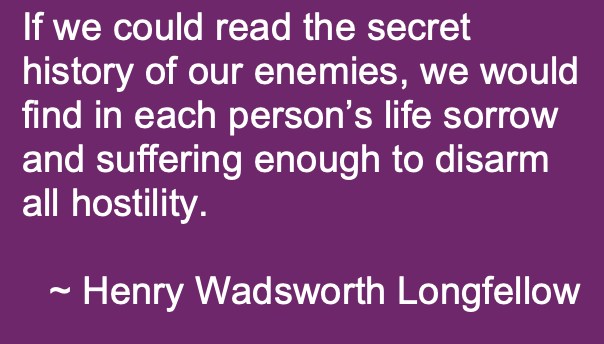 James explained that before winning the lottery, he had been a baker who was good at what he did, appreciated by customers, and part of a community of people he liked. He never felt alone. But after winning, driven by the internalized cultural messages that entering a world of luxury and leisure would make him happier, he quit his job and moved away to an upscale neighborhood. “I traded in my friends and a job I loved and moved to a neighborhood where people kept to themselves in their giant houses. It’s lonely.” Instead of being fulfilled, James was sick and miserable. Sadly, he also seemed unlikely to switch from the unhealthy diet he “medicated” his ill feelings with, even though he knew his health depended on doing something different.
What if James had been in a BP support group? What if he could have shared his thoughts and feelings with people he trusted who could provide caring support as he sorted through them and came to know which of his thoughts and perceptions truly served him – and which didn’t – to move toward experiencing the well-being he sought?
Be Present offers not only ideas about connection, but also a lived practice of experiencing the conditions in which we can connect. Meeting people with warmth, respect, patience, and genuine listening assists us toward feeling safe enough to risk being authentic and able to enjoy the kind of belonging and awareness that supports both personal and community well-being.
With loneliness and disconnection taking such a profound toll on the bodies, minds, and spirits of so many, this work is not peripheral. It is essential. The Be Present culture and the BPEM reminds us that well-being often begins, not with fixing or “should-ing,” but with making it possible for all of us to more consistently give and receive the life-enhancing experiences of being seen, heard, valued, and connected again.

